Someone Skipped Court on Your Case. Guess Who's Looking for Them. Nobody.

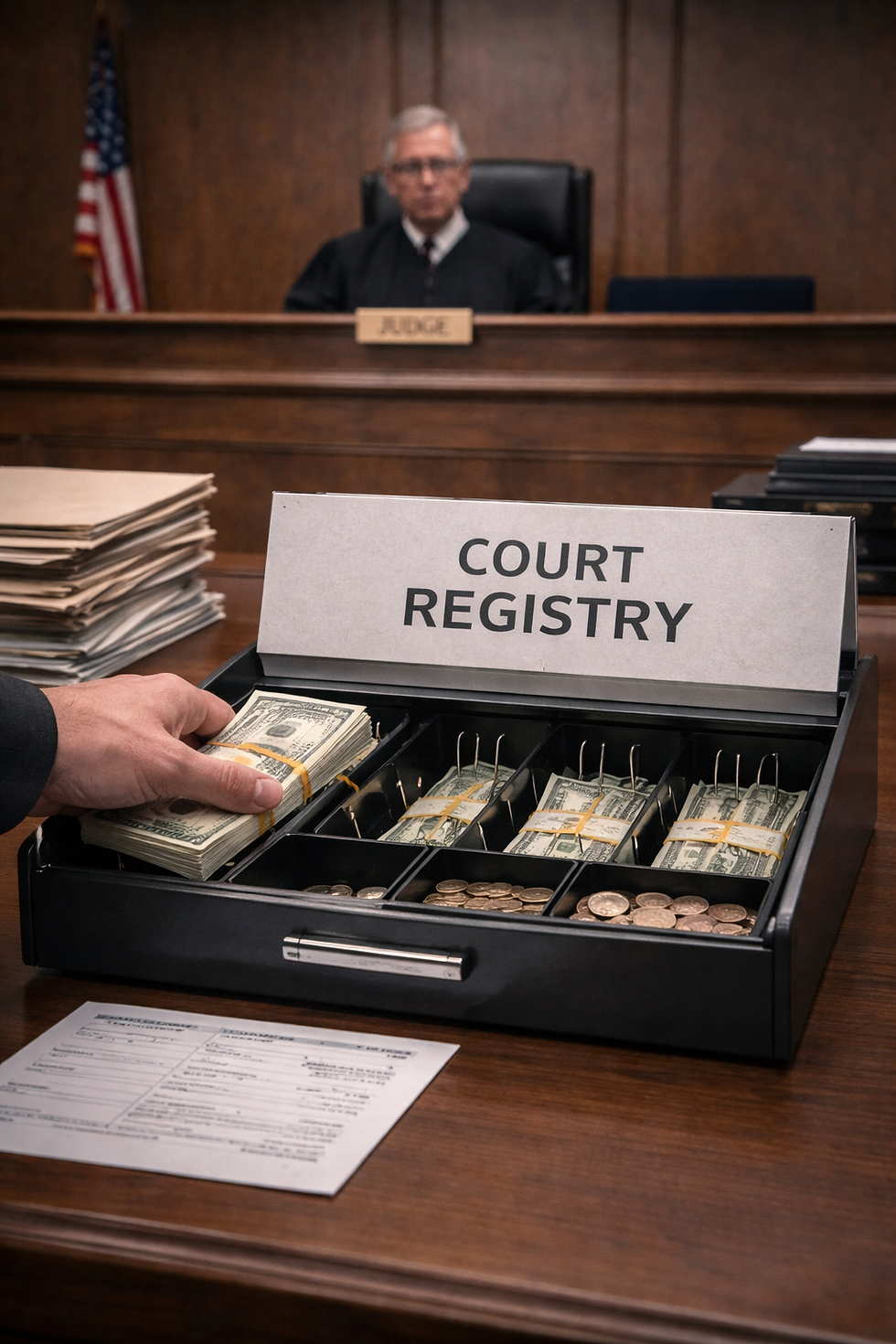
There's a detail in Washington's proposed bail overhaul that changes everything about how the criminal justice system works — and almost nobody is talking about it. Everyone's focused on the $200 misdemeanor bail cap. That's the headline. But buried in the same proposal is a provision that applies to the entire criminal docket, misdemeanors and felonies alike: a "strong presumption" that defendants can satisfy any bail amount by depositing 10% directly with the court clerk.

Any bail amount. Not just $200 misdemeanor bail. Any. That means the guy charged with felony assault whose bail is set at $25,000? He can argue he should only have to post $2,500 with the clerk. The strong presumption is on his side. No bail agent involved. No monitoring. No third party with a financial reason to make sure he shows up to his next hearing.
So if he doesn't show — who goes looking for him? Today, when a defendant is released on a surety bond, the bail agent has real money at stake. Not the defendant's $20. The full bail amount. That agent calls the defendant. Checks in. Knows where they live, who co-signed, how to find them. If the defendant runs, the agent goes after them. Washington law literally says these agents "serve a necessary and important purpose" in the justice system by "locating, apprehending, and surrendering fugitive criminal defendants."
Under the proposed rules, that whole system gets sidelined. Not banned — just made economically irrelevant. Why would a defendant use a bail agent when the court will let them deposit 10% directly? Why would anyone choose the option with monitoring and accountability when the alternative is cash-and-walk?
So the monitoring stops. The check-ins stop. The recovery stops. And when defendants disappear — which federal data says happens at roughly three times the rate with unsecured release compared to surety bonds — the bench warrant goes to the local sheriff. Your local sheriff. The one with five deputies covering three hundred square miles. The one who's already handling domestic calls, drug investigations, traffic enforcement, and court transports. Somewhere in that stack goes a bench warrant for the guy who skipped his felony hearing. And another one. And another.
How long does your warrant sit? Depends on where you live. In some Washington counties, low-priority warrants essentially sit forever. In dense urban jurisdictions, they compete with thousands of others for limited enforcement hours.
Meanwhile, you — the victim — wait. Your case can't proceed without the defendant present. Hearings get rescheduled. Months pass. Your motivation to participate fades. Witnesses forget details. Evidence gets stale. Eventually the case might just... die.
The organizations pushing this proposal didn't fund a single new warrant officer. Didn't propose a pretrial monitoring program. Didn't create a court reminder system. Didn't budget for anything to replace what they're removing.
They saw a system with problems — and there are real problems — and instead of fixing it, they pulled the plug. No backup generator. No plan for what happens when the lights go out.
We know what happens. Federal data tells us. Fugitive rates go up. Warrants accumulate. Law enforcement gets stretched thinner. Cases stall. And victims — the people this system is supposed to serve — get left behind.
If you think someone should actually be looking for the person who committed a crime against you, say so before April 30, 2026. rulescomments@courts.wa.gov.
```


Comments