They're Rewriting Washington's Criminal Court Rules and They Don't Want You to Know

Somewhere in Olympia, right now, four public defense organizations are trying to push through the biggest change to Washington's bail system in decades. They're doing it through a court rulemaking process most residents have never heard of. And they've specifically asked that there be no public hearing.
That last part is worth repeating. They filed their proposal with the Washington Supreme Court and wrote, on page one: "A public hearing is not recommended." They don't want you in the room.

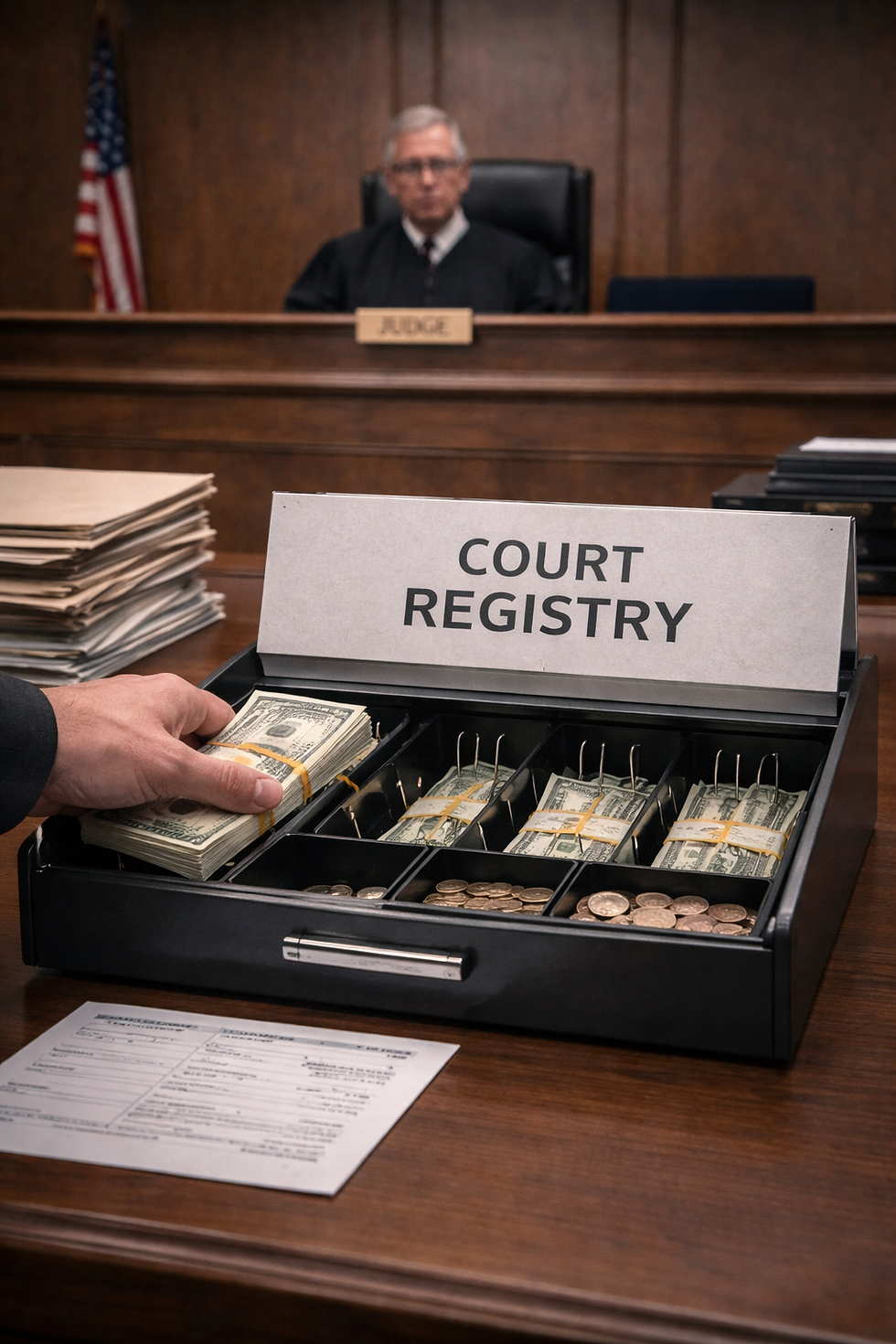
Here's what they're proposing. Bail for most misdemeanor offenses gets capped at $200. A "strong presumption" lets defendants — in any criminal case, misdemeanor or felony — satisfy bail by depositing just 10% with the court clerk. The standard for deciding whether someone is a flight risk gets rewritten so narrowly that it's practically useless at a first hearing.
These aren't tweaks. This is a top-to-bottom redesign of how Washington handles pretrial release. It affects every courthouse in the state. Every victim waiting for their case to be heard. Every sheriff's department that serves warrants. Every community that relies on the court system to mean something.
And it's happening through a written comment period that closes April 30, 2026. No public testimony. No televised hearings. No elected officials voting on the record. Just a docket entry on the court's website that you'd never find unless someone told you where to look.
Why does this matter? Because if this were a bill in the legislature, you'd see it debated. Victims' groups would testify. Sheriffs would explain what happens when warrant backlogs grow. Prosecutors would describe how cases collapse when defendants stop appearing. Court clerks would talk about what it's like to run a deposit collection operation with no staff. Voters could watch and decide whether their representatives got it right.
None of that happens in court rulemaking. The proponents file their proposal. Written comments come in. The Supreme Court deliberates privately. And one day a rule appears that affects every criminal case in the state.
The proponents are the King County Department of Public Defense, the Washington State Office of Public Defense, the Washington Defender Association, and the Snohomish County Office of Public Defense. These are public defense organizations. Their job is to advocate for defendants. That's a legitimate and important role. But when you're asking a court to restructure the entire pretrial system — not just for your clients, but for every victim, every witness, every community in Washington — doing it without a hearing isn't strategy. It's avoidance.

What are they avoiding? Maybe the questions they can't answer. Like: who monitors defendants when there's no bail agent involved? Who recovers fugitives when the private sector is displaced? Who funds the warrant enforcement backlog? What happens to victims when cases stall because defendants don't show? Why should the court hold defendant money and adjudicate the same case — and how is that consistent with judicial ethics rules requiring courts to avoid even the appearance of financial conflict?
These questions haven't been asked because the proponents designed a process that doesn't include the people who would ask them.
You can change that. The comment period runs through April 30, 2026. You don't need a law degree. You don't need to know the rule numbers. Just write and tell them what you think. Tell them you want a public hearing before they change the rules that affect your safety. Tell them victims deserve a seat at the table.
Send comments to rulescomments@courts.wa.gov.
Or don't. And find out what changed after it's already done.


Comments